“The miracle is this: the more we share the more we have.” – Leonard Nimoy
Every August, my sister goes through the same routine. New backpack, new binders, a fresh set of pens because the old ones “don’t feel right” anymore. Last year I asked her what happened to last year’s backpack. She looked at me like I’d asked a trick question. It was still in her closet, barely used but not new anymore.
So much of what families and students buy every year isn’t because the old thing stopped working. It’s because starting fresh feels easier than digging through what’s already there.
Why we default to buying new
Families go through an enormous amount of stuff. Kids outgrow clothes every season. Families replace school supplies every fall, whether they need it or not. Students move constantly, in and out of dorms or apartments, and it’s just simpler to buy a cheap desk lamp than to figure out who might already have one.
The problem is that all of this adds up. Money spent on things that already exist somewhere nearby. Decluttering for families becomes its own yearly chore, and dorm decluttering becomes a scramble every May when the semester ends and nobody wants to deal with what’s left behind.
The shift: reuse as the normal choice
None of this requires a big lifestyle overhaul. It’s really just one extra question before buying something new: does someone else already have this? A neighbor, a classmate, a or both families and students start the same way: treat borrowing and giving as the default, not the backup plan.
Practical tips for families
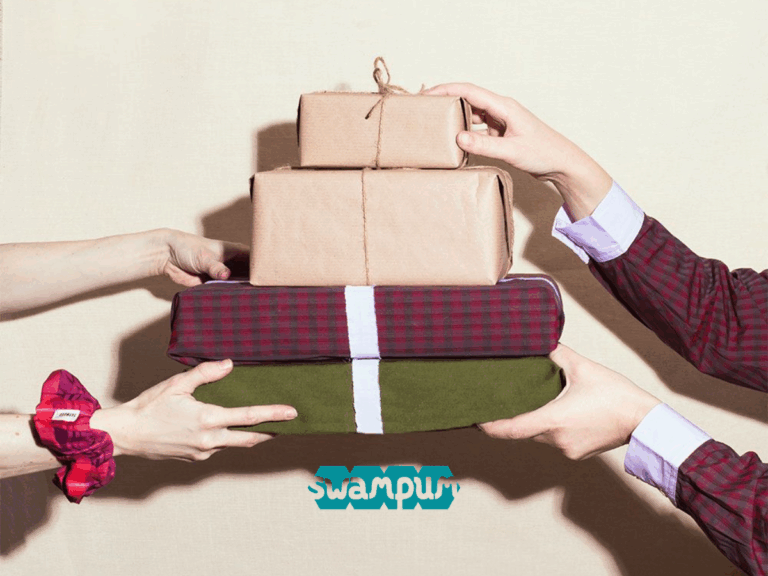
For families, most of this already happens without anyone naming it. Kids pass clothes and shoes down as they grow, moving from one kid to the next instead of buying new every season. A toy or book that’s been outgrown can go to another family instead of sitting in a bin in the garage. Costumes, sleds, and sports gear often only get used a few weeks a year. It’s worth asking around before buying, since there’s a good chance someone nearby already has one taking up space.
The easiest way to make this stick is to give it a spot. A shelf by the door, a bin in the hallway, somewhere that holds whatever you’re ready to give away so it’s part of the routine instead of a big clean-out once a year. (For more on setting that up room by room, our organizing tips guide walks through it.)
This works even better in a group. A few families, a group of neighbors, a church community, all handing things down within the same circle. When a kid outgrows a bike or a stroller, the group already knows who’s next in line. Some families even keep it going year after year. The same batch of winter coats passes through the same few households every fall instead of starting over each time.
Practical tips for students
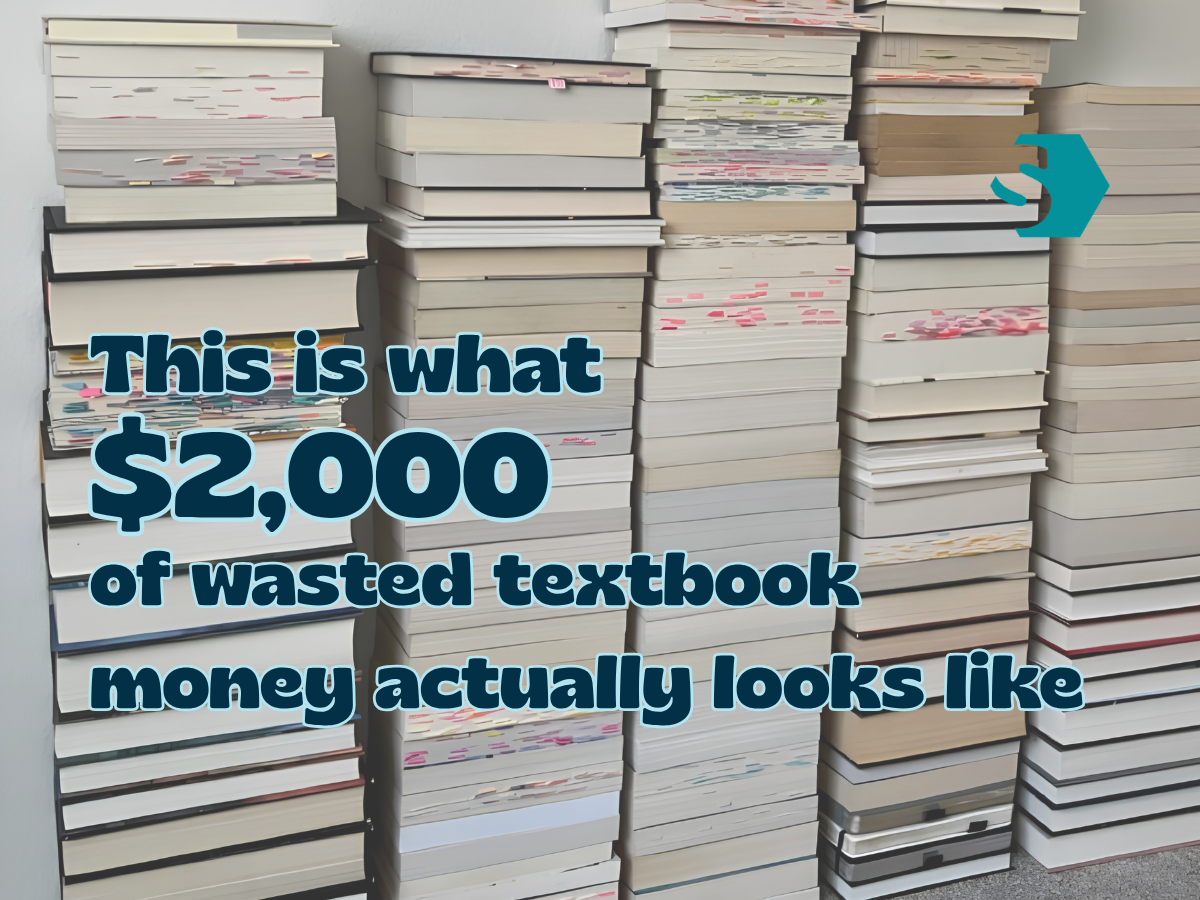
For students, back to school reuse looks a little different, but the idea holds. Textbooks can come from someone who already took the class instead of getting bought new every semester, especially with how steep the average student’s yearly book budget has gotten. Tools, kitchen stuff, furniture, all of it makes more sense shared with roommates than duplicated three times in one apartment. At the end of the year, dorm stuff can go to next year’s students instead of the trash, since they’re going to need exactly the same things in August, especially with how much usable stuff colleges see piling up curbside every May. And for anything that’s a one-time use, like an interview suit or a tool for a single project, borrowing first just makes sense before buying something that’ll sit in a closet after.
As with families, this gets easier in a group. A dorm floor, a friend group, a club, all with people cycling in and out every year. When incoming students already know who has the mini fridge or the desk lamp from last year, it saves everyone a trip to the store. Some groups even keep a running list at the end of each semester. That way nothing gets left behind in May with nowhere to go.
Where Swampum fits in
This is really what a sharing economy looks like at a neighborhood level. Swampum makes it simple to pass along what you no longer need and get what you’re actually looking for. Maybe that’s secondhand school supplies, a lamp, or last year’s textbook. There’s no buying or selling, just neighbors, classmates, and family members exchanging useful things and earning points for what they give. It turns borrow-don’t-buy from a nice idea into something you can actually do on a random Tuesday.
Start small this week
You don’t need to declutter your whole house or dorm room this weekend. Simple living for families and students alike starts with one item. Look around for one thing you no longer need and pass it along on Swampum. See how easy mindful consumption for students and families can actually be once it’s not a chore anymore.